Every April and again around October, our living room turns into a tumbleweed exhibit. If you share your home with a double-coated dog, you know the feeling. Here in northeast Ohio, with our long winters and humid summers, the shedding seasons can feel especially dramatic.
Why dogs "blow" their coats
Many breeds — huskies, shepherds, labs, goldens, corgis, Aussies — have a double coat: a soft, dense undercoat for insulation and longer guard hairs on top. As daylight changes in spring and fall, the body sheds the old undercoat to make room for one suited to the coming season. That's the "blow out."
Single-coated breeds (poodles, many terriers) shed far less seasonally, but they still lose and regrow hair year-round.
What's normal, and what's not
Normal seasonal shedding is even across the body, the skin underneath looks healthy, and your dog isn't bothered by it. It's worth a vet visit if you notice:
- Bald patches or thinning in one area
- Red, flaky, greasy or smelly skin
- Constant scratching, licking or chewing
- Shedding that suddenly gets worse outside the usual seasons
Those can point to allergies, parasites, hormonal issues or infections — all things a veterinarian should look at.
A brushing routine that actually works
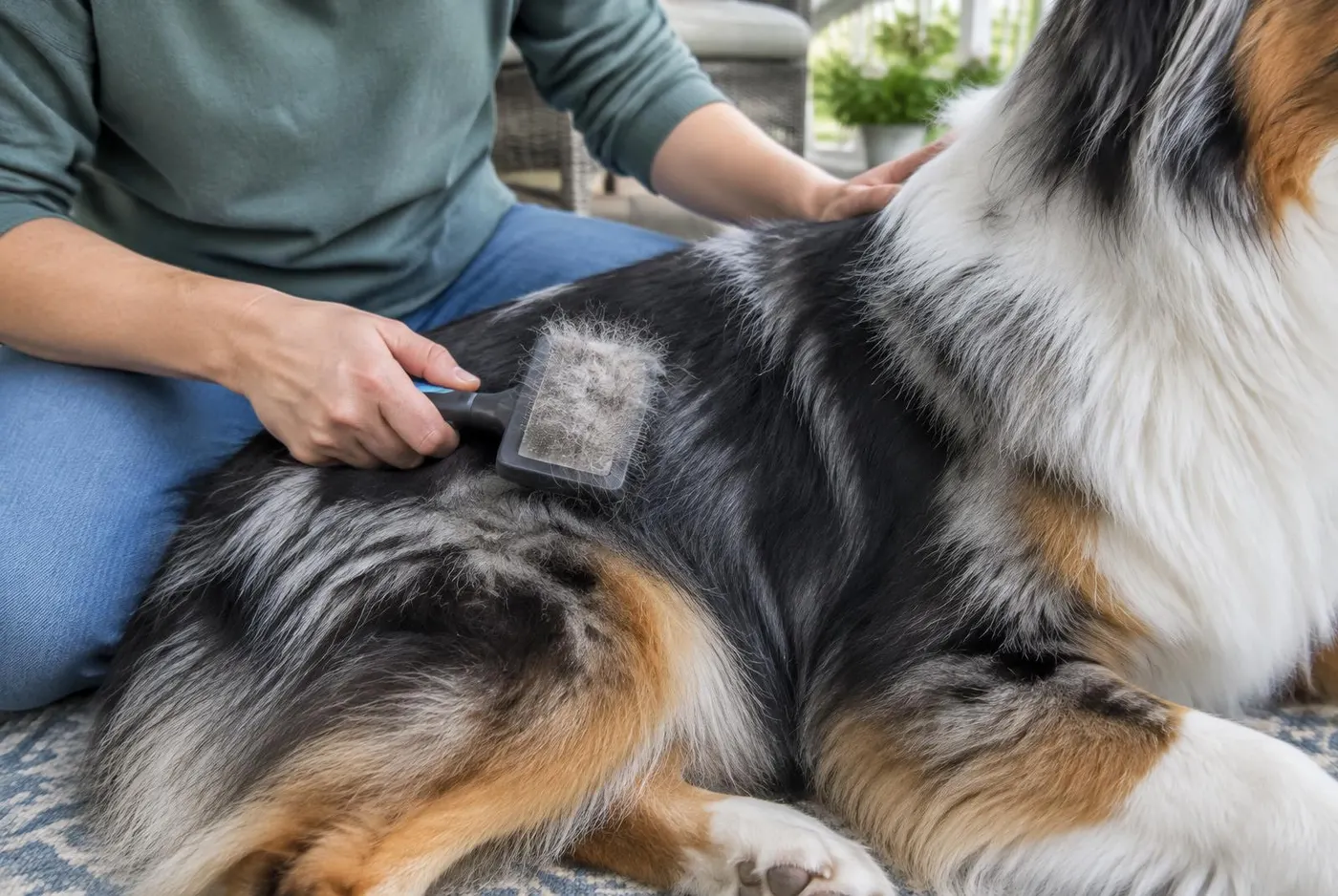
During shedding season, short and frequent beats long and occasional. Five to ten minutes a day keeps the undercoat from matting and saves your vacuum.
- Undercoat rake for double-coated dogs — work in the direction the hair grows.
- Slicker brush to lift loose hair and finish.
- Bristle brush or grooming mitt for short-coated dogs.
Never shave a double-coated dog to "help" with shedding. The undercoat protects them from both cold and heat, and it may grow back unevenly.
Bathing without drying the skin
A warm bath with a gentle, dog-specific shampoo can loosen a lot of undercoat at once. Follow with a thorough blow-dry on a cool setting while brushing. Bathing more than every three to four weeks can dry the skin, so keep baths occasional.
Nutrition from the inside out
A coat is built from protein and fat, so diet matters. A complete, balanced food is the foundation. Fatty acids — omega-3s and omega-6s — play a big role in skin moisture and coat shine. Hydration matters too, especially in dry winter air when the heat is running.
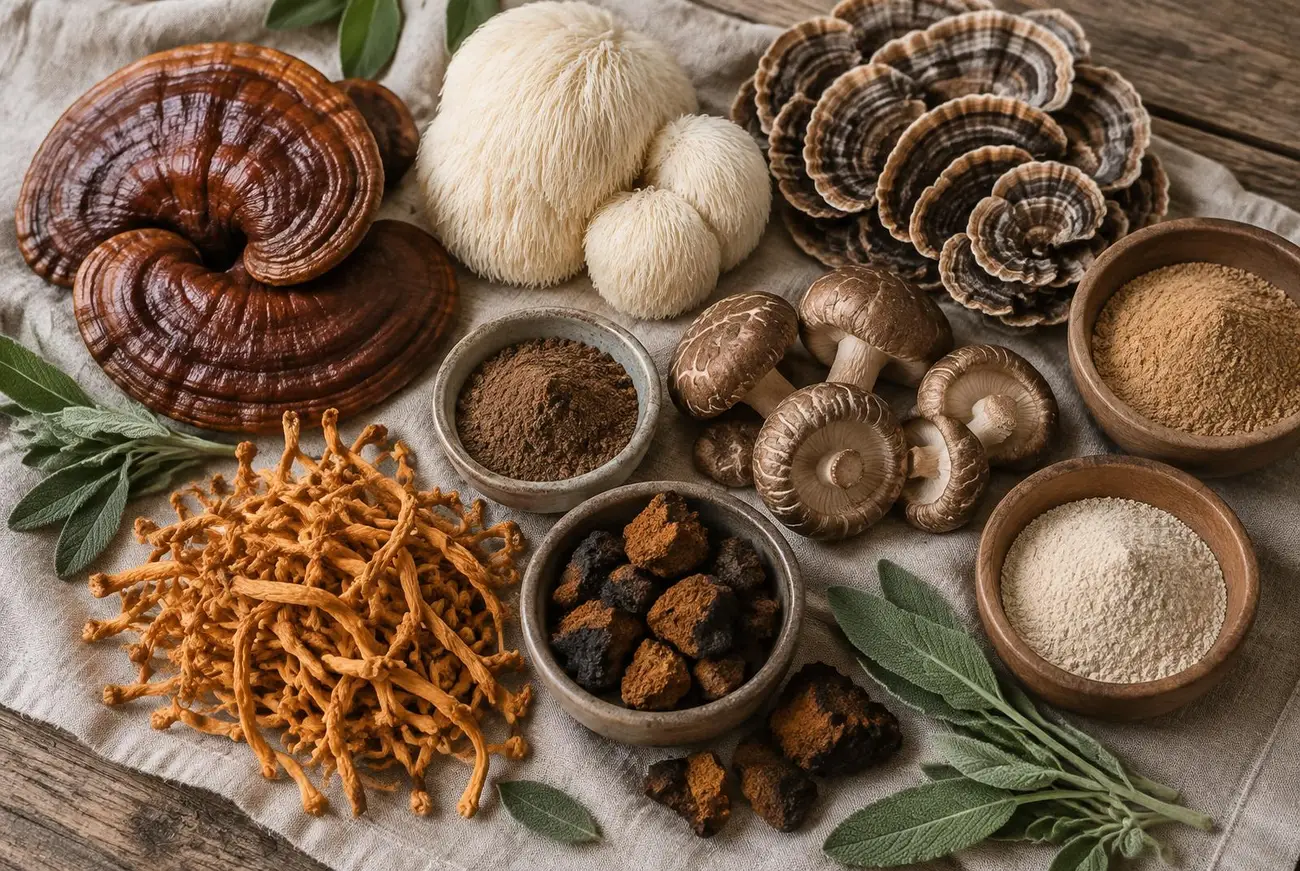
That's the thinking behind our Skin & Coat formula: plant omega-3s from flax and pumpkin seed, zinc and biotin, with tremella and reishi mushrooms. It's a daily habit that supports a healthy coat over time — not a quick fix for a skin problem.
Quick shedding-season checklist
- Brush 5–10 minutes daily during spring and fall.
- Bathe once at the start of the season, then every 3–4 weeks at most.
- Keep fresh water available and consider a humidifier in winter.
- Feed a complete, balanced diet with healthy fats.
- Check the skin while you brush — and call your vet if something looks off.