If you've walked down the supplement aisle at a pet store lately, you've probably noticed mushrooms everywhere. Reishi in calming chews, turkey tail in immune blends, lion's mane in "brain support" powders. It's a big shift from a few years ago, and it's fair to ask whether it's substance or just a trend.
I started FurHealth because I asked that same question about my own dogs. Here's what I've learned, written the way I wish someone had explained it to me.
What "functional" actually means
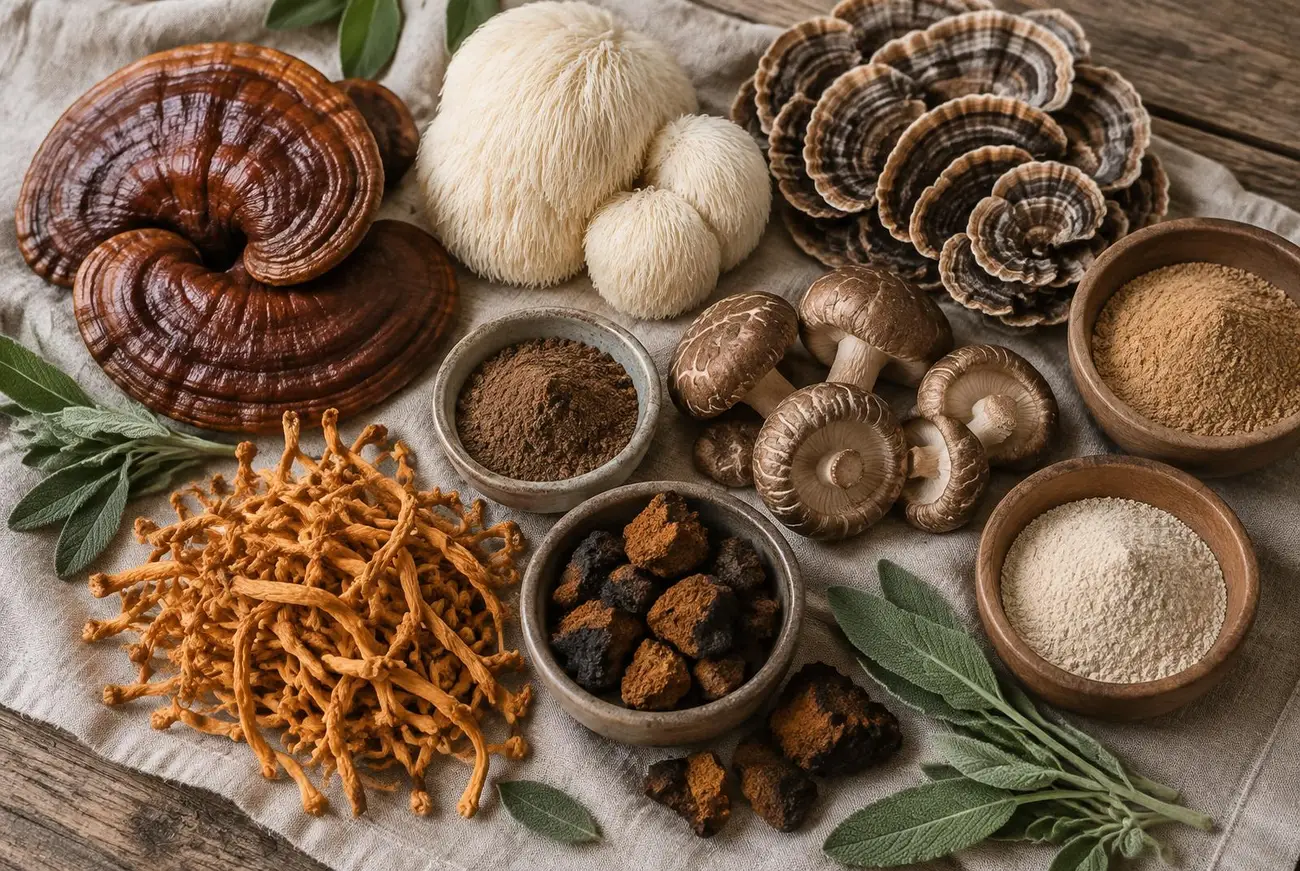
A functional mushroom is simply a mushroom used for more than flavor. The term covers species like reishi (Ganoderma lucidum), turkey tail (Trametes versicolor), lion's mane (Hericium erinaceus), shiitake, maitake, cordyceps and chaga. None of them are "magic" mushrooms — they don't have psychoactive properties. Several, like shiitake and maitake, are ordinary grocery-store foods.
What makes them interesting is their chemistry. Mushrooms are rich in polysaccharides called beta-glucans, along with compounds like triterpenes (in reishi) and hericenones (in lion's mane). These are the components researchers study when they look at mushrooms and immune function, gut health or cognition.
What the research says (and doesn't)
There's a meaningful body of research on mushroom beta-glucans in people and in lab settings, and a smaller, growing number of studies in dogs. Turkey tail in particular has been studied in veterinary settings. The honest summary is: the evidence is promising for supporting normal body functions, but it is not evidence that a mushroom powder treats disease.
A good supplement fills small gaps and supports a healthy routine. It doesn't replace a veterinarian, a balanced diet or a daily walk.
That's why you won't see us claim that any FurHealth product cures, prevents or treats anything. If a brand makes those claims about a mushroom, that's a reason to be skeptical.
Fruiting body vs. mycelium: the detail that matters most
This is the single most useful thing to know when comparing products. A mushroom has two main parts:
- The fruiting body — the part you'd recognize as a mushroom.
- The mycelium — the root-like network that grows underground or through a substrate.
Many inexpensive supplements are made from mycelium grown on grain like oats or rice. When it's harvested, the grain gets ground up with it. The result can be mostly starch, with far fewer beta-glucans than the label suggests. Look for "fruiting body" on the label, and if a company publishes beta-glucan testing, even better.
How to choose a mushroom supplement for your pet
- Check the part used. Fruiting body, or fruiting body extract.
- Read the full ingredient list. Fewer, recognizable ingredients is usually a good sign.
- Look for amounts. A proprietary blend with no numbers makes it impossible to compare.
- Ask about testing. Mushrooms absorb what they grow in, so heavy-metal testing matters.
- Talk to your vet — especially if your pet takes medication or has a chronic condition.
Starting slowly
Most dogs and cats accept mushroom powders easily, but any new food can upset a sensitive stomach. Start with half a serving for the first week, mixed into a meal your pet already loves. Watch for changes in appetite or stools, and step back if anything seems off.
Want to see exactly what goes into our formulas? Our ingredients page lists every mushroom we use, where it comes from and why it's there.