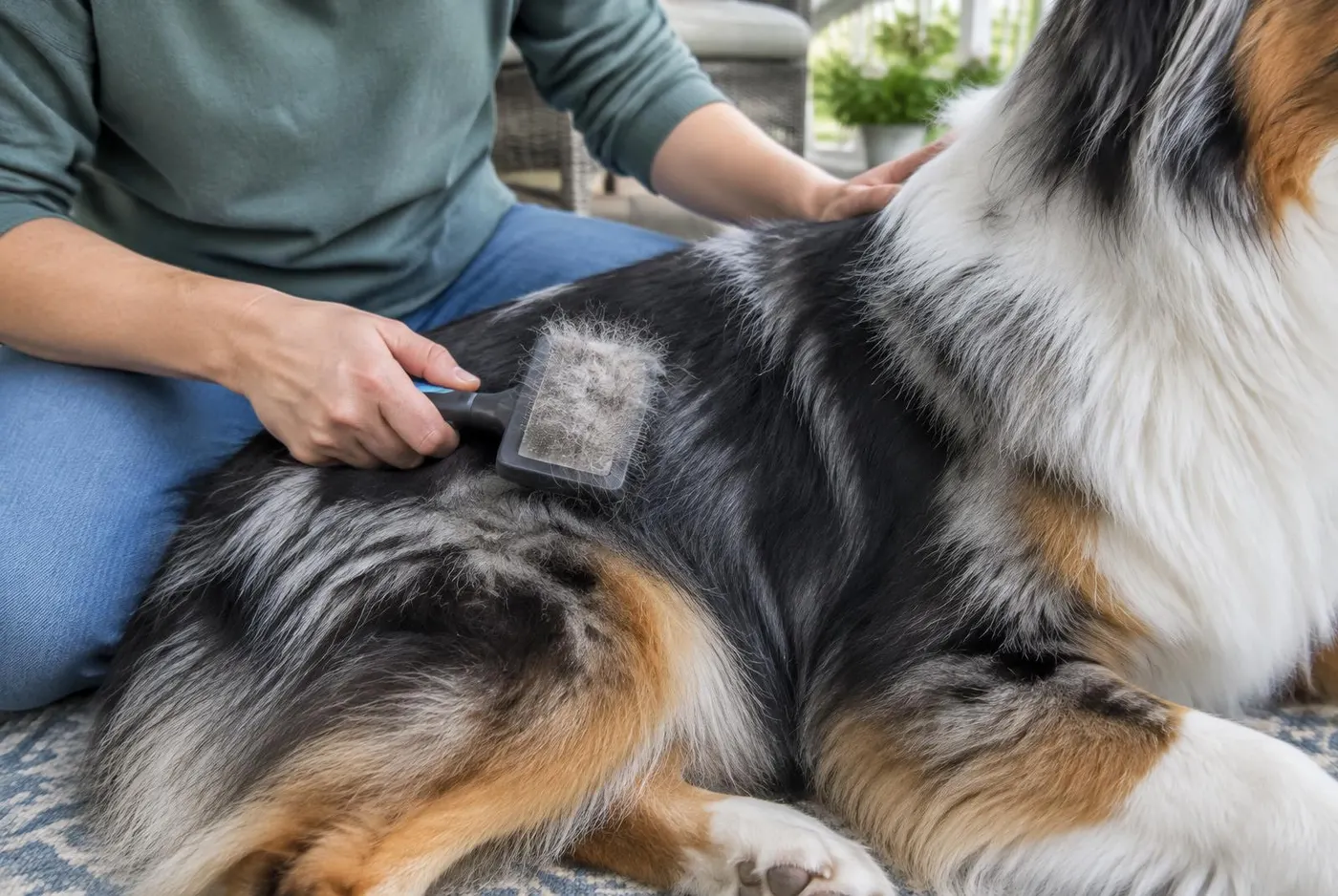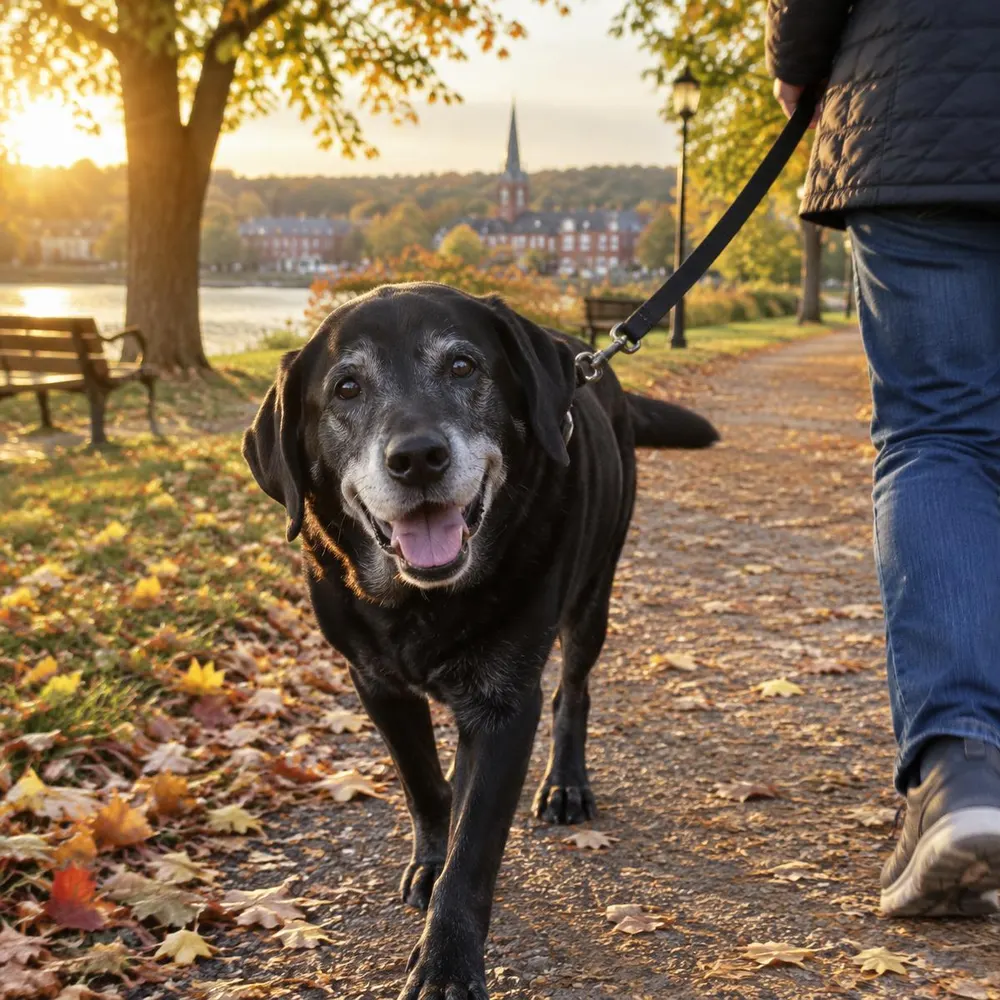
There's something about a gray-muzzled dog that gets right to the heart. They've earned the comfy spot on the couch. But staying gently active is one of the best things we can do to help them enjoy their later years.
When is a dog a "senior"?
It depends on size. Giant breeds may be considered seniors at 5 or 6, while many small dogs don't reach that stage until 10 or later. Our pet age calculator gives a quick estimate. Once your dog reaches their senior years, most vets recommend checkups twice a year.
Weight is the biggest lever
Every extra pound puts more strain on aging joints. Research in Labradors found that dogs kept lean throughout life lived longer and developed joint problems later than their heavier littermates. You should be able to feel your dog's ribs easily under a thin layer of fat, and see a waist from above.
- Measure food with a real measuring cup, not a scoop "by eye."
- Count treats as part of daily calories.
- Swap some treats for green beans or carrot slices if your vet agrees.
Move a little, often
Two or three shorter walks are usually kinder than one long one. Let your dog sniff — mental exercise tires them out without stressing joints. Swimming is a fantastic low-impact option if your dog enjoys water. Avoid sudden bursts like fetch on hard ground and jumping off high furniture.
Small home changes that help
- Rugs or runners on slippery floors so paws don't slide.
- Ramps or steps for the couch, bed or car.
- A supportive orthopedic bed away from drafts.
- Raised food and water bowls for large dogs who find bending uncomfortable.
- Nail trims — long nails change how a dog stands and walks.
Joint supplements: what to expect
Glucosamine, chondroitin, MSM and green-lipped mussel are among the most commonly recommended joint-support ingredients. They're used to support healthy cartilage and comfortable movement, and they work slowly — think six to eight weeks, not overnight. Our Hip & Joint chews include all four, along with turmeric and cordyceps.
Supplements support; they don't treat. If your dog is limping, struggling to stand or seems to be in pain, see your veterinarian. Pain in older dogs is very treatable, and they're often better at hiding it than we think.
Signs to mention at your next vet visit
- Hesitating before stairs or jumping into the car
- Stiffness after resting that eases with movement
- Licking at a particular joint
- Changes in sleep, appetite or mood
- Lagging behind on walks they used to love